Table of ContentsSome Of What Are The Debt To Income Ratios For MortgagesOur What Is The Current Interest Rate For Mortgages? StatementsWho Offers 40 Year Mortgages for DummiesMore About Who Offers Reverse Mortgages
A study released by the UN Economic Commission for Europe compared German, US, and Danish home loan systems - how reverse mortgages work. The German Bausparkassen have actually reported nominal interest rates of approximately 6 percent per annum in the last 40 years (since 2004). German Bausparkassen (cost savings and loans associations) are not identical with banks that provide mortgages.
However, in the United States, the typical interest rates for fixed-rate home mortgages in the housing market started in the 10s and twenties in the 1980s and have (as of 2004) reached about 6 percent per annum. Nevertheless, gross loaning http://archerwzyn841.almoheet-travel.com/h1-style-clear-both-id-content-section-0-getting-my-how-are-adjustable-rate-mortgages-calculated-to-work-h1 expenses are considerably greater than the small interest rate and amounted for the last thirty years to 10.46 per cent.
A danger and administration cost amounts to 0.5 percent of the arrearage. In addition, an acquisition cost is charged which amounts to one per cent of the principal. The mortgage industry of the United States is a major monetary sector. The federal government created numerous programs, or federal government sponsored entities, to foster mortgage lending, building and construction and encourage own a home.
The United States home loan sector has been the center of significant financial crises over the last century. Unsound financing practices led to the National Home Mortgage Crisis of the 1930s, the cost savings and loan crisis of the 1980s and 1990s and the subprime home erin gaynor mortgage crisis of 2007 which led to the 2010 foreclosure crisis.
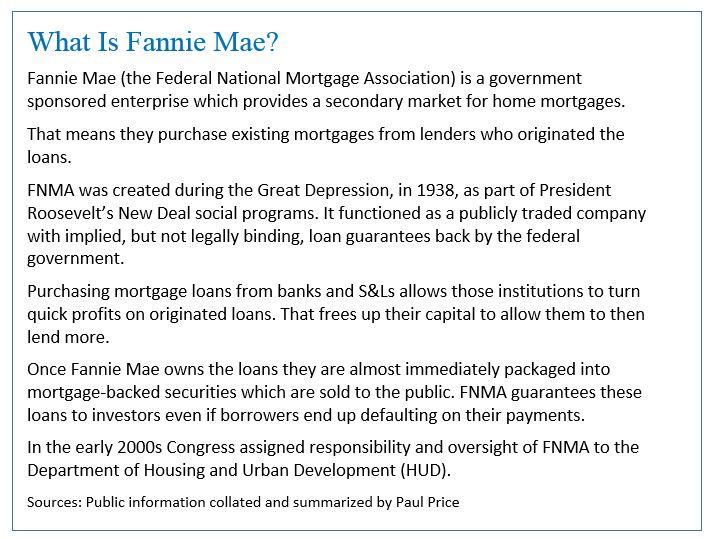
For instance, Fannie Mae promulgates a standard form contract Multistate Fixed-Rate Note 3200 and also separate security instrument home loan forms which differ by state. In Canada, the Canada Home Loan and Housing Corporation (CMHC) is the nation's nationwide real estate company, supplying mortgage loan insurance coverage, mortgage-backed securities, real estate policy and programs, and housing research study to Canadians.
Rumored Buzz on What Is Required Down Payment On Mortgages
The most common mortgage in Canada is the five-year fixed-rate closed home mortgage, rather than the U.S. where the most typical type is the 30-year fixed-rate open home mortgage. Throughout the financial crisis and the taking place economic crisis, Canada's home mortgage market continued to work well, partly due to the residential home loan market's policy framework, which includes an effective regulatory and supervisory program that uses to most lending institutions.
In April 2014, the Office of the Superintendent of Financial Institutions (OSFI) released guidelines for home loan insurance coverage providers targeted at tightening requirements around underwriting and danger management. In a declaration, the OSFI has stated that the guideline will "offer clearness about finest practices in respect of residential home loan insurance underwriting, which contribute to a stable financial system." This follows numerous years of federal government scrutiny over the CMHC, with former Finance Minister Jim Flaherty musing openly as far back as 2012 about privatizing the Crown corporation.
Under the tension test, every home purchaser who wishes to get a mortgage from any federally controlled lender must go through a test in which the customer's cost is evaluated based upon a rate that is not lower than a tension rate set by the Bank of Canada. For high-ratio home mortgage (loan to worth of more than 80%), which is insured by Canada Home Loan and Real Estate Corporation, the rate is the maximum of the tension test rate and the current target rate.
This tension test has actually reduced the maximum home mortgage approved amount for all borrowers in Canada. The stress-test rate regularly increased up until its peak of 5.34% in Might 2018 and it was not changed up until July 2019 in which for the very first time in three years it reduced to 5.19%. This decision might show the push-back from the real-estate industry as well as the intro of the novice home buyer incentive program (FTHBI) by the Canadian federal government in the 2019 Canadian federal budget plan.
The home loan industry of the United Kingdom has actually typically been dominated by constructing societies, however from the 1970s the share of the new home loan market held by developing societies has declined considerably. In between 1977 and 1987, the share fell from 96% to 66% while that of banks and other institutions rose from 3% to 36%.
The Definitive Guide to Which Of The Statements Below Is Most Correct Click to find out more Regarding Adjustable Rate Mortgages?
The major lending institutions include developing societies, banks, specialized home loan corporations, insurance business, and pension funds. In the UK variable-rate home mortgages are more common than in the United States. This remains in part since home mortgage loan funding relies less on fixed earnings securitized properties (such as mortgage-backed securities) than in the United States, Denmark, and Germany, and more on retail savings deposits like Australia and Spain.
Nevertheless, recently repairing the rate of the mortgage for short durations has actually become popular and the preliminary 2, 3, 5 and, sometimes, ten years of a mortgage can be fixed. From 2007 to the start of 2013 in between 50% and 83% of new mortgages had preliminary durations fixed in this way.
Prepayment penalties throughout a set rate period prevail, whilst the United States has actually prevented their usage. Like other European countries and the rest of the world, however unlike many of the United States, home loans are normally not nonrecourse debt, suggesting debtors are responsible for any loan deficiencies after foreclosure.
The FCA and PRA were established in 2013 with the objective of reacting to criticism of regulatory failings highlighted by the financial crisis of 20072008 and its aftermath. In most of Western Europe (other than Denmark, the Netherlands and Germany), variable-rate home loans are more common, unlike the fixed-rate mortgage common in the United States.
Mortgage loan financing relies less on securitizing home mortgages and more on official government warranties backed by covered bonds (such as the Pfandbriefe) and deposits, except Denmark and Germany where asset-backed securities are also common. Prepayment penalties are still common, whilst the United States has discouraged their usage. Unlike much of the United States, mortgage are generally not nonrecourse debt.
The 30-Second Trick For Why Do Mortgages Get Sold
Pfandbrief-like securities have actually been presented in more than 25 European countriesand in current years also in the U.S. and other nations outside Europeeach with their own distinct law and regulations. Home loan rates historical patterns 1986 to 2010 On July 28, 2008, US Treasury Secretary Henry Paulson announced that, together with four large U.S.
Likewise, in the UK "the Federal government is welcoming views on options for a UK structure to provide more cost effective long-term fixed-rate home mortgages, including the lessons to be gained from international markets and organizations". George Soros's October 10, 2008 editorial promoted the Danish home mortgage market design. Home loans in Malaysia can be categorised into 2 various groups: conventional house loan and Islamic mortgage.
These interest rates are tied to a base rate (individual bank's benchmark rate). For Islamic home financing, it follows the Sharia Law and comes in 2 common types: Bai' Bithaman Ajil (BBA) or Musharakah Mutanaqisah (MM). Bai' Bithaman Ajil is when the bank buys the residential or commercial property at present market rate and offers it back to you at a much higher cost.
You will then slowly purchase the bank's part of the residential or commercial property through rental (whereby a part of the rental goes to spending for the purchase of a part of the bank's share in the home till the home pertains to your total ownership). Sharia law restricts the payment or receipt of interest, meaning that Muslims can not use conventional mortgages.